A Candle in the Vast Darkness
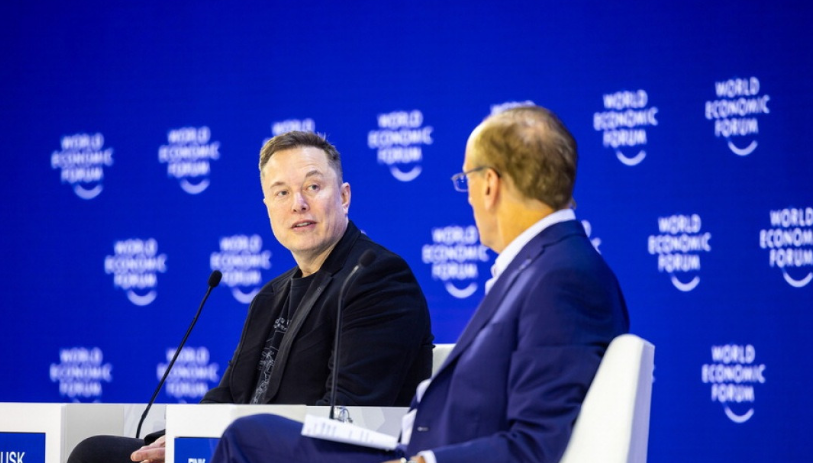
January 2026, Davos, Switzerland. A man who had long criticized this forum as an "unelected world government" stood before it for the first time. Elon Musk sat across from Larry Fink, Chairman of BlackRock, and spoke:
"In my mind's eye, I see a small candle in vast darkness. A tiny candle of consciousness that could easily be extinguished."
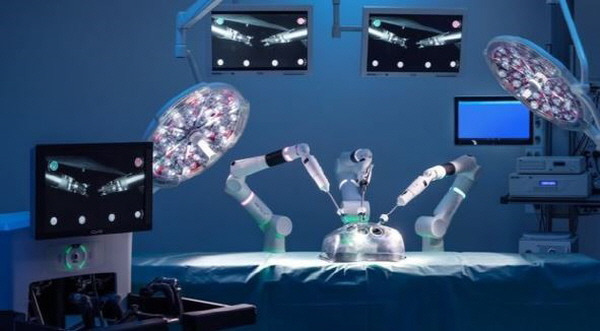
His words were poetic, but his vision of the future was concrete. Within this year, an artificial intelligence smarter than any human will emerge, and by 2030, an entity surpassing all of humanity combined will appear. By the end of 2026, anyone can buy a humanoid robot for $28,000, and that robot will care for children, tend to the elderly, and within three years perform surgery better than the finest surgeons. No need to go to medical school. No need to prepare for retirement.
A Future Already Begun
This might sound far-fetched. Indeed, Musk has promised "full self-driving next year" every year, only to delay it by 2-3 years each time. It's known as "Elon Time." But 2026 is different. This time, there's evidence.
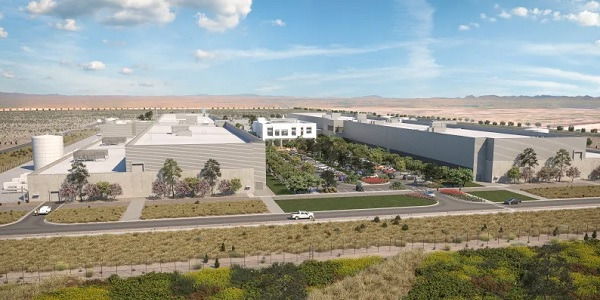
In Austin, Texas, cars with empty driver's seats cruise the roads. Google's Waymo completed 14 million paid rides in 2024, with a target of 1 million rides per week this year. In Memphis, Tennessee, an XAI supercomputer funded with $18 billion (25 trillion won)—more than Samsung's Pyeongtaek semiconductor plant—is operational. At Tesla factories, the humanoid robot Optimus is already carrying battery cells, and over 1,000 units will be deployed this year. At CES 2025, chip manufacturer NVIDIA announced its entry into the autonomous driving market.
The era of mere promises has ended. The era of actual deployment has begun.
The Terror of Triple Exponential Growth
Musk calls this "triple exponential growth." AI software capabilities, AI chips, and mechanical precision are each growing exponentially, compounded by Optimus robots building more Optimus robots. When one robot learns a surgical technique, every robot worldwide instantly acquires that skill through the cloud.
Becoming a surgeon takes at least 13 years and costs tens of millions of won. For machines, it takes days. Humans learn linearly, but machines learn exponentially. Linear growth: 1, 2, 3, 4. Exponential growth: 1, 2, 4, 8, 16. Over time, the gap becomes astronomical.
The Collapse of Labor Value
Let's calculate. A 40-year-old Korean office worker earns an average salary of 57 million won. Including social insurance, the company's burden is 5.8 million won per month. An Optimus costing 28 million won, amortized over 3 years, costs 780,000 won per month—less than 1 million won even with maintenance. One-sixth the cost of a human, operating 24 hours with no vacation or severance pay.
According to a Bank of Korea report, 3.41 million domestic jobs—12% of the total—are highly susceptible to AI replacement. Yet these aren't manual labor positions but high-income professionals: doctors, accountants, lawyers. Knowledge work involving information gathering, analysis, writing, and persuasion will disappear first.
Consider LASIK surgery. In the 2000s, doctors manually incised corneas with scalpels. Now, laser machines do it. Doctors just press buttons. Musk cited exactly this example: "Robots perform laser eye surgery. So what does the doctor do?"
Abundance for Whom?
Musk says, "Robots will do everything, so humans can live abundantly without work." Beautiful words. But who distributes that abundance? The owners of the robots distribute it. Are they voluntarily sharing now?
Since the 2000s, labor's share of income has been declining in both the US and Korea. Productivity rises while real wages stagnate. Corporate profits increase while workers' shares decrease. Technology advancement overwhelms institutional change. AI improves twofold annually, while labor law remains stuck in its 1987 framework. Individuals bear the transition costs. Benefits flow to corporations and investors; adaptation costs fall on workers.
Five Survival Checkpoints
Recall the 1997 IMF crisis. There were signs, but people thought, "Surely our country won't collapse?" Then it crumbled in an instant. The structure is similar now. Signs appear gradually but collapse happens suddenly. Salary freezes extend for three years, hiring stops, departments merge, and suddenly your name appears on the early retirement list.
So what must we do? Check five things:
First, income structure. Do you have income sources beyond your salary? The more diversified your income streams, the better you can withstand one collapsing.
Second, fixed expenses. If housing and education costs exceed 50% of income, you're at risk. This structure collapses immediately when income drops.
Third, emergency funds. Do you have liquid assets to sustain 6 months to a year if suddenly unemployed?
Fourth, task decomposition. Information retrieval, document creation, and repetitive decision-making are easily AI-replaceable. Face-to-face persuasion and creative problem-solving are harder to replace. Which way does your work lean?
Fifth, learning capacity. When did you last learn a new skill? Stopping learning is choosing obsolescence.

Technotopia's Shadow and the Era of Gaebyeok
But we must ask a deeper question. Is economic preparation enough?
Musk's future is a double-edged sword. He seeks to make humanity a multi-planetary species to preserve "civilization's candle." He promises to solve energy problems with space-based solar satellites and usher in an age of abundance where robots handle all labor. Yet beneath this lies the loss of human meaning, extreme polarization, and class stratification between robot owners and non-owners.
There's a more fundamental problem. As Western material civilization reaches its apex, humans have forgotten what they are. The "singularity" where AI surpasses humanity isn't merely a technological inflection point. It represents the terminus of the Early Heaven's material civilization and demands transformation into the Later Heaven's spiritual civilization—a Gaebyeok (開闢, Great Transformation) situation.
What was the essence of Eastern culture transmitted in Hwandan Gogi (桓檀古記, Chronicles of Hwan and Dan)? "朝光先受地(Jogwang-seonsueji) 三神赫世臨(Samsin-hyeokseim)"—"In this land that first receives the morning light, the Divine Triune God (三神, Samsin) descends radiantly." Humans were originally beings embodying divine nature (sinseong, 神性). Yet Western material civilization has reduced humans to tools, parts, and data. Now that robots replace human labor, what remains for humans who have lost even their labor?
Only Spiritual Recovery Can Save Us
Jeungsan Sangjenim (the Supreme Deity who opens the Later Heaven) proclaimed that the Later Heaven civilization of 50,000 years would unfold through Haewon and Sangsaeng (解冤相生, resolution of bitterness and grief and mutual life-bettering). As the Early Heaven's principle of mutual conflict (相克, sanggeuk) reaches its extreme and humans face subjugation to machines, the true survival strategy transcends economic preparation.
First, we must recover humanity's divine nature (sinseong, 神性). Even if AI surpasses humans in intelligence, machines cannot replicate the essence of consciousness. As sung in the Seoheosa (誓效詞): "誠在事天神 (Seongjae-sacheonsin)"—sincerity in serving the Celestial Deity, wholehearted devotion to Heaven and Earth as parents—this is what makes humans truly human.
Second, self-development must extend beyond skill acquisition to inner reflection. What robots cannot replace: empathy, compassion, creative intuition through spiritual practice, and spiritual awakening. This is entirely different from learning AI tool usage.
Third, we must recover community spirit. To prevent a dystopia where robot owners monopolize abundance, a mature community culture of mutual life-bettering (sangsaeng, 相生) that shares wealth and cares for the vulnerable must take precedence.

The Prepared and the Awakened
On Austin's roads, empty cars drive. In Tesla factories, robots work. In Memphis, supercomputers run ceaselessly. In Davos, the world's richest man said, "No need to prepare for retirement."
This is the singularity economy at our doorstep. Yet true preparation isn't opening a stock account or taking AI courses. Just as the difference between those prepared and unprepared for the 1997 IMF crisis determined 20 years of outcomes, the difference between the awakened and the unawakened now will determine the Later Heaven's 50,000 years.
The "small candle in vast darkness" Musk spoke of isn't merely civilization's technological candle. It is humanity's consciousness candle, the flame of divine nature. Preserving this flame requires more than multiplying assets. It requires recovering one's spiritual essence, reclaiming one's inherent divine nature, and living in unity with Heaven and Earth.
Check now. Economically, yes—but more importantly, spiritually. In the era of the Later Heaven Gaebyeok (後天開闢), opportunities open for the prepared; a new world unfolds for the awakened.
'Great Opening' 카테고리의 다른 글
| 2026 Davos Forum: Blockchain Evolves from 'Speculation' to 'National Infrastructure' (0) | 2026.01.22 |
|---|---|
| Day 2: Understanding the pattern of time (0) | 2026.01.12 |
| Day 1: The Fever Dream We're All Living (0) | 2026.01.12 |


