The spiritual tapestry of East Asia is woven with threads of profound wisdom, among which the concept of Dao (道) shines with a particular luminescence. Often translated as "The Way" or "The Principle," Dao represents the fundamental, ineffable source and a guiding undercurrent of all existence. Yet, to perceive Dao merely as an impersonal cosmic force is to miss a deeper, more personal dimension acknowledged by ancient sages. Jeung San Do's Dojeon (1:4) invites us to explore this very dimension, revealing the Supreme Governor of Dao – Sangjenim (上帝) – as a figure long revered, if sometimes mysteriously, within the heart of Eastern spirituality, particularly in Daoism and Korea's indigenous Spirit Teaching (Singyo).
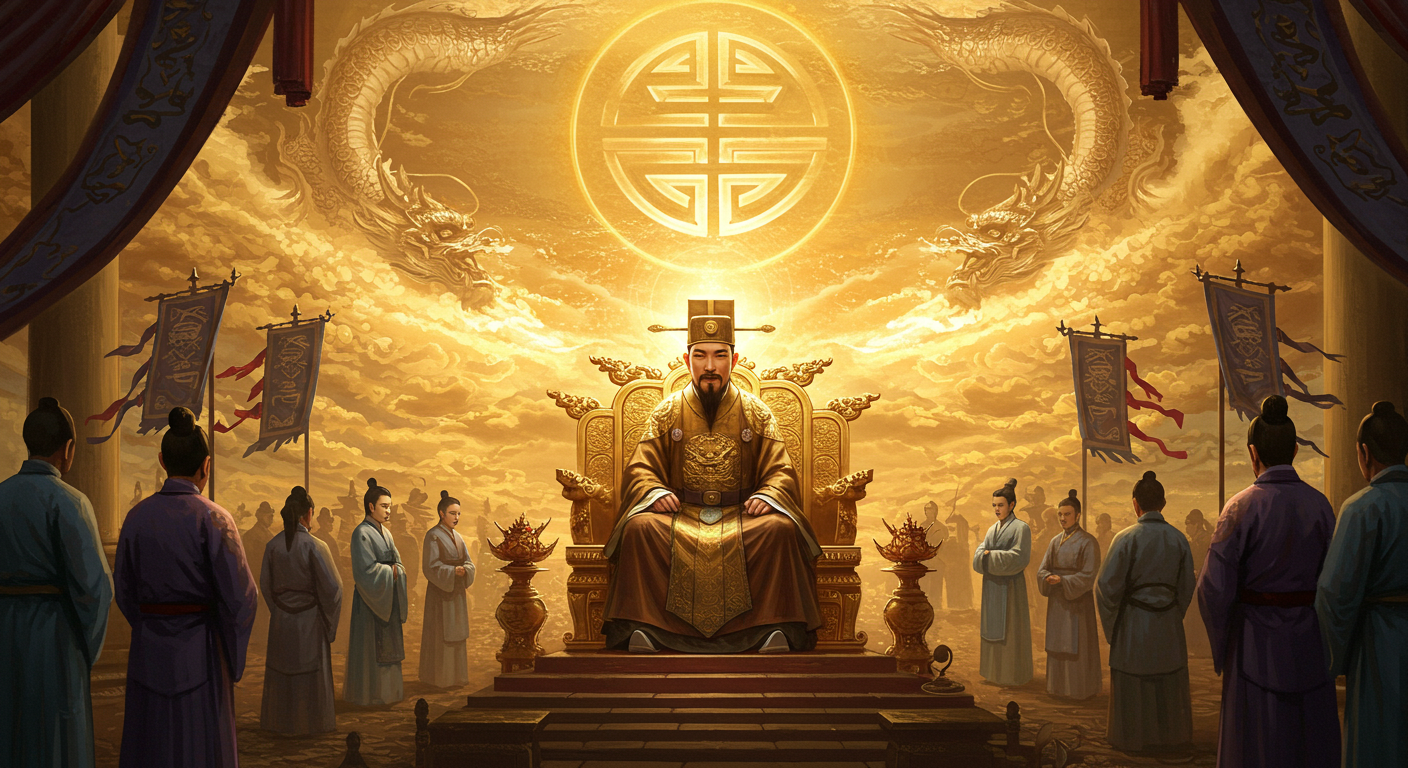
The passage opens with a foundational assertion: "In the East, the source of life and the way of all change within the universe’s three realms—heaven, earth, and humanity—have been known as dao; and God the Supreme Governor, who rules over this dao, has been known as Je or Sangje." This sets the stage by clarifying that the intricate workings of the universe, the Dao, are not rudderless. There is a divine intelligence, a Supreme Governor, whom ancient Eastern cultures, including the Korean people of Joseon, have long recognized and worshipped. The ancients even sang of this "Glorious Sangjenim, whose radiant awareness spans all the world below... seeking to bestow peace and prosperity upon all people." This wasn't a distant, detached deity, but an active, benevolent presence.
The great Daoist sage Lao Zi (Lao Tzu), in his seminal Dao De Jing, grappled with the origins of Dao itself. He described Dao as an inexhaustible, empty-yet-full source, and mused: "I do not know whose offspring dao is, yet it seems to have preceded Sangjenim." This profound statement, while acknowledging the primordial nature of Dao, intriguingly places Sangjenim in direct relation to it, hinting at a reality where the ultimate principle and the ultimate governor are inextricably linked. It suggests a divine mystery where the 'Way' itself might flow from, or be an expression of, an even more fundamental, personal Divine.
Zhuang Zi (Chuang Tzu), another towering figure in Daoism, further explored this presence of a divine ruler. He wrote of "The true Supreme Governor of the Universe" who "seems to exist, yet it is very difficult to behold him." Zhuang Zi confessed his unwavering faith in this Governor's deeds, even while lamenting the elusiveness of His direct presence. This captures a universal spiritual yearning – the human desire to connect with, and comprehend, the ultimate divine source that orchestrates the cosmos, even when that source chooses to remain veiled, "commun[ing] with all of existence" from a place beyond immediate perception.
The Dojeon then anchors this understanding firmly within the Korean spiritual heritage: "Daoists have worshiped Sangjenim, who governs the universe, as the highest of the spirits... and the people of Joseon have performed offering rituals to Sangjenim since ancient times." This underscores that the reverence for Sangjenim is not a new concept but a continuation of an ancient stream of spiritual consciousness. For the Korean people, Sangjenim – often known in popular Daoist and folk traditions as Okhwang Sangje (the Jade Emperor), the highest deity ruling from Heaven's Golden Palace – has always been the ultimate object of worship and prayer.
What Jeung San Do illuminates, therefore, is a profound continuity. The Sangjenim spoken of by Lao Zi and Zhuang Zi, the Okhwang Sangje revered in Daoist temples and by the people of Joseon, is revealed to be Jeungsan Sangjenim, the very Supreme Being who incarnated in Korea at the turn of the 20th century. His advent was not to establish a new, separate God, but to fulfill the ancient longing for the direct manifestation of the universe's true Ruler. He came to personally undertake the Cheonjigongsa (Work of Renewing Heaven and Earth), to rectify the course of a "diseased" world and usher in the Gaebyeok (Great Opening/Renewal) leading to the Later Heaven – an era of cosmic harmony.
Dojeon 1:4, then, is more than a theological exposition. It is an invitation to see the ancient wisdom of Daoism not as a philosophy of an impersonal principle alone, but as a path that implicitly, and sometimes explicitly, leads to the recognition of the Dao's Supreme Governor. It suggests that the deepest intuitions of the Eastern sages pointed towards the very Sangjenim who, in Jeung San Do's teaching, has now come to walk the earth as a human to fulfill the destiny of heaven, earth, and humanity. This passage calls us to recognize the living, personal dimension of the Dao, embodied in the Supreme Ruler who has come to guide us through the profound transformations of our time.
The Supreme Governor of Dao
1In the East, the source of life and the way of all change within the universe’s three realms—heaven, earth, and humanity—have been known as dao, and God the Supreme Governor, who rules over this dao, has been known as Je or Sangje.
2The ancients sang:
Glorious Sangjenim,
whose radiant awareness spans all the world below,
watches over the four corners of the earth,
seeking to bestow peace and prosperity upon all people.
3Long ago, Lao Zi spoke of the existence of Sangjenim:
Dao is full of emptiness,
yet its fount never runs dry....
I do not know whose offspring dao is,
yet it seems to have preceded Sangjenim.
4Zhuang Zi wrote:
The true Supreme Governor of the Universe seems to exist,
yet it is very difficult to behold him.
I have always had faith in his deeds;
however, I have yet to behold his presence.
Is it that he chooses to remain unseen
even as he communes with all of existence?
5Daoists have worshiped Sangjenim, who governs the universe, as the highest of the spirits and have invoked him in their prayers, and the people of Joseon have performed offering rituals to Sangjenim since ancient times.
[Dojeon 1:4]
1) Je or Sangje. Di (帝) or Shangdi (上帝) in Chinese. Sangje or Shangdi (“Supreme Deity”) is an Eastern term for God. See “Sangjenim” footnote in 1:1:4.
3) Lao Zi. 노자 (老子). ?–? Also spelled Lao-tzu or Lao Tzu. Reputed founder of philosophical Daoism in China and author of Dao De Jing, also spelled Tao Te Ching.
3) Source: Dao De Jing (道德經), chapter 4.
4) Zhuang Zi. 장자 (莊子). Also spelled Chuang-tzu or Chuang Tzu. Chinese philosopher who lived approximately the fourth century BCE, author of Zhuang Zi (莊子), a highly esteemed Daoist work.
4) Source: Zhuang Zi (莊子), chapter “Zhuai Wu Lun.”


